
OpenDeSci Product Update June 2026

Published: 05 June 2026
Over the past six months, OpenDeSci has progressed from validated prototype to a
fully functional iOS application now in active community beta testing. As of June 2026,
50 selected testers from the OpenDeSci community are using the app daily, providing
structured feedback ahead of public launch. Three core product modules have been
built and are running in their hands. Our core thesis remains unchanged:
Science is fundamentally under-distributed. AI and decentralization enable a step-change in how scientific knowledge is created, explained, discovered, and rewarded.
We are building a modular, AI-native science platform that transforms how research is
consumed, explored, and queried, designed for both academia and the next billion
learners.
Our Product Thesis
Global science output continues to grow exponentially, yet:
Over 80% of research remains inaccessible behind paywalls or technical jargon
Attention has shifted to short-form, algorithmic content, where science is largely absent
Non-specialist audiences lack tools to find, understand, and synthesize peer-reviewed knowledge
Researchers lack tools to translate impact into visibility, funding, and adoption
OpenDeSci addresses this gap by combining AI agents, semantic research infrastructure, and Web3-native incentives, now packaged into three product modules currently in community beta.
Beta Product Modules
The following three modules are built, running in the iOS application, and currently in active beta with 50 selected community testers.
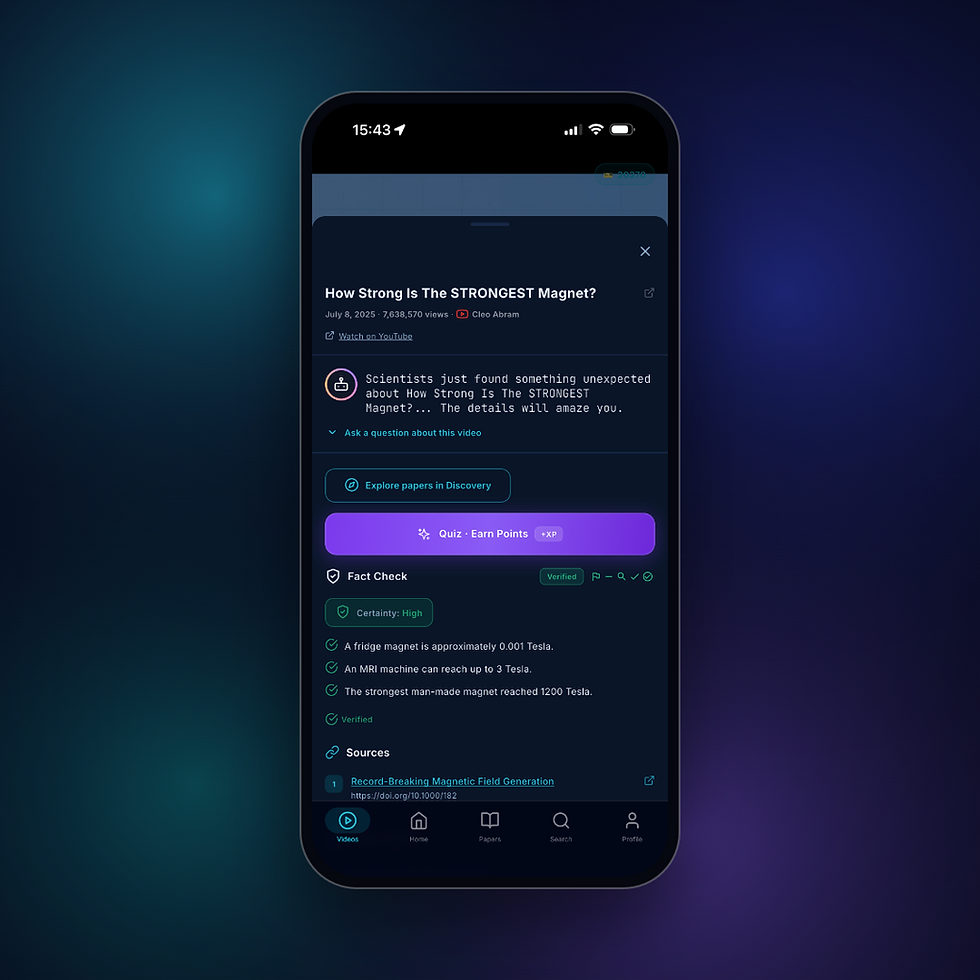
AI Science Video Feed with Embedded Fact-Check and Quizzes

What it does
A personalized, TikTok-style vertical science feed that converts complex research into engaging short-form content, supplemented by AI-generated fact-checks and adaptive retention quizzes for measurable learning.
Key capabilities
Vertical short-form video feed with daily Spotlight, Continue Watching, and Just Dropped rails
AI-generated fact-check panel surfacing key claims with source citations
Three-question adaptive quizzes generated per video, with XP and streak mechanics
Personalization based on completion data and topical interest signals
Content sourced from leading science communicators across YouTube and partner channels
Why it matters
Combines short-form attention patterns with retrieval-practice retention loops grounded in cognitive psychology
Early beta signals indicate significantly higher session time and recall versus passive consumption of static abstracts
Differentiates OpenDeSci from incumbent platforms by adding verifiable trust and measurable learning
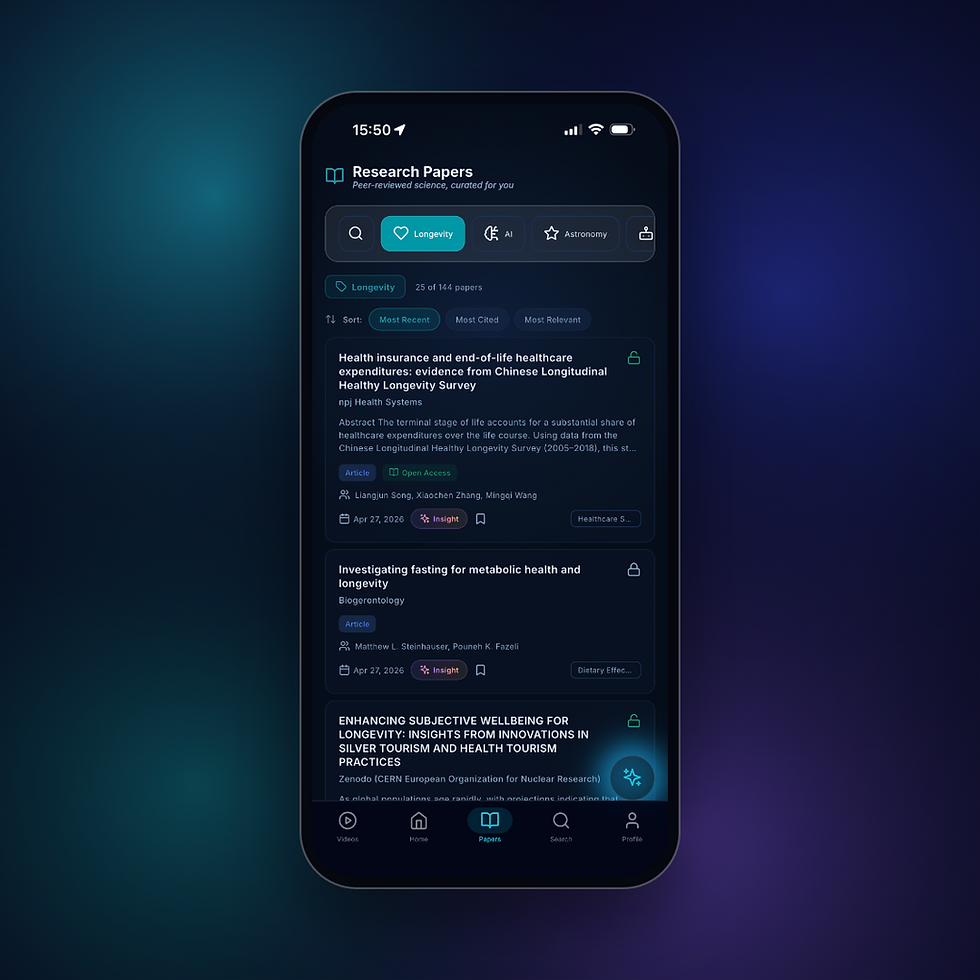
Topic Explorer of Scientific Papers

What it does
A curated, topic-organized research paper discovery feed designed for non-specialist readers, with plain-language insights generated for every paper at three reading levels.
Key capabilities
Topic-first organization across six verticals at launch (Longevity, AI, Astronomy and three others), expanding to sixty by end of year
Sort by Most Recent, Most Cited, or Most Relevant within each vertical
Open-access flagging with automatic routing to legal open versions where available
"Insights" view replacing the abstract with Core Takeaway, Key Findings, and Why It Matters sections
Three reading registers per paper: General Public, Student, and Professional
Why it matters
Reorganizes research literature around how non-specialists actually search for knowledge
Provides the first major surface for science discovery that does not require academic training
Functions as both a consumer reading experience and a structured input layer for downstream AI tools
OpenDeSci Search (Research Wizard)


What it does
A natural-language semantic search engine that retrieves, ranks, and synthesizes multiple research papers into a single cohesive answer with footnoted source attribution.
Key capabilities
Plain-English question input across the open-access scientific literature
Up to twenty ranked candidate papers per query with rich metadata (title, lead author, year, citations, journal)
User-selectable synthesis covering one to ten papers per session
Cohesive analytical output identifying findings, consensus, and open questions
Resume function for multi-session research workflows
Why it matters
Compresses a literature review workflow from several hours to under two minutes
Democratizes deep research synthesis beyond the institutional research community
Establishes the foundation for OpenDeSci as a primary research interface, not just a content layer
Beta Traction & Early Signals
OpenDeSci is currently in private beta with 50 selected community testers actively using the iOS application. Early signals validate the core hypothesis:
50 active beta testers selected from the OpenDeSci community, providing structured weekly feedback on all three modules
50,000+ waitlist sign-ups awaiting public launch
500+ members in the OpenDeSci alpha community on Telegram
5M+ organic views generated across science explainer campaigns on social platforms with minimal paid acquisition spend
Six topic verticals seeded with curated peer-reviewed papers across Longevity, AI, Astronomy, and three additional domains
Strong inbound interest from researchers, educators, journalists, and institutional partners
Qualitative feedback from beta testers highlights:
Sustained demand for AI-assisted comprehension of dense research
Clear engagement signals among Gen Z and graduate-student testers in the beta cohort
High interest in the Research Wizard from policymakers and journalists evaluating biomedical and climate research
Recurring requests for Android availability, additional language support, and creator partnership programs
Forward Outlook
Summer 2026: Beta cohort expansion from 50 to 500 community testers, iteration on feedback across all three modules, public iOS launch
For inquiries, please contact:
OpenDeSci Communications
About OpenDeSci:
OpenDeSci is a next-generation science education and content platform leveraging Web3 and AI to make science radically more accessible, transparent, and engaging for 8 billion people.
Comments